Tools & Education

Resources to Help You Make Confident Benefits Decisions

Insurance can be dense. This library has guides, tools, and links to help employers, individuals, and Medicare-eligible adults understand their options — whether you’re a current client or just starting your research.

For Employers & HR

Benefit Management Platforms

Ease and Employee Navigator

Major medical coverage for employees and their families. We compare plans from multiple carriers and help you find deductibles your team can actually manage.

Mineral

The Mineral platform is step by step direction built to take the guesswork out of HR and compliance. It allows you to understand both the simple and complex group of people in your organization.

Ease How To Video Guides

What Ease Can Do For Employers
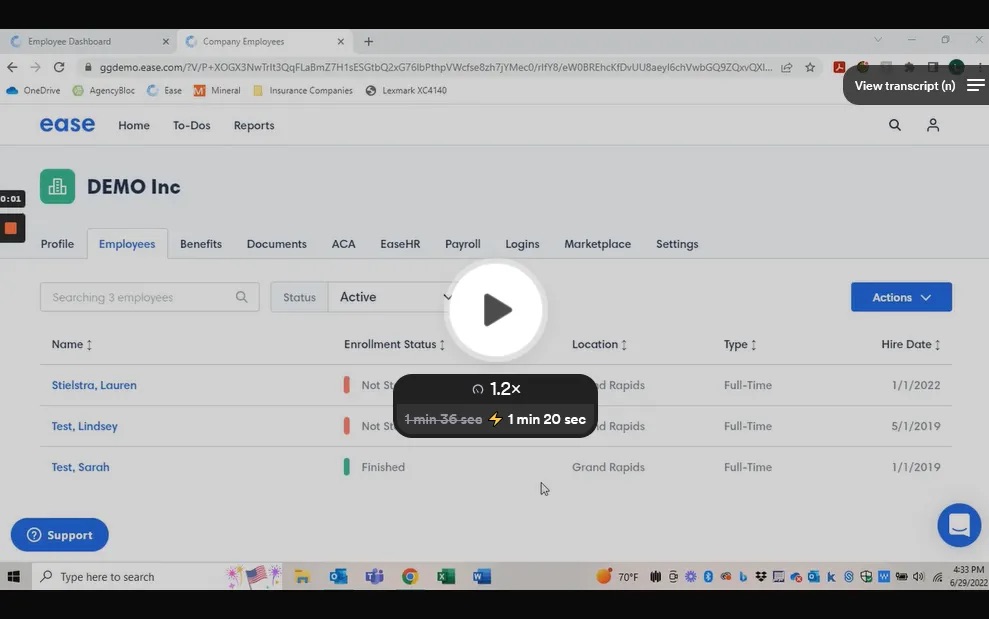
Adding An Employee In Ease
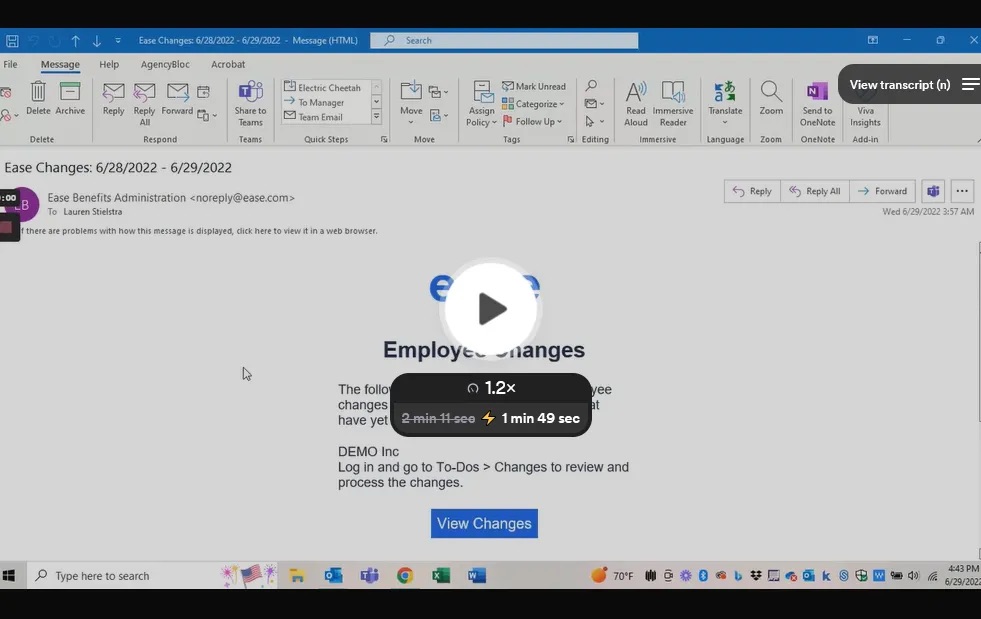
What To Do When Employee Submits Changes In Ease
Terminating An Employee In Ease

Mineral Guides & Articles

ACA Reporting Requirements for Employers

The Affordable Care Act (ACA) carries annual reporting requirements for certain employers. Review this video to learn more about one of those requirements

Onboarding: No, They Won't Read that Handbook at Home

An employee’s first days and weeks can be chaotic, but they don’t have to be. With a little planning, onboarding can be a smooth and exciting time for new employees and managers alike

Dress Codes and Personal Hygiene: The Good, the Bad, and the Smelly

Dress codes can be a challenge, including deciding whether to have one at all. We provide a few basic tips to get you started, as well as some helpful language about odors in the workplace.

Documentation: The Magic Formula

If you’ve watched the video on at-will employment, you know that documentation is crucial when you’re aiming for a low-risk termination (or other employment action an employee won’t like). Join us to find out the essential elements of business-protecting documentation.

Terms To Know

The maximum amount the plan will pay for each health care service covered by your plan. This may be called “eligible expense,” “payment allowance” or “negotiated rate.” If your provider charges more than the allowed amount, you may have to pay the difference.
When a provider bills you for the balance remaining on the bill that your plan doesn’t cover. For example, if the provider’s charge is $200 and the allowed amount is $110, the provider may bill you for the remaining $90. This happens most often when you see an out-of-network provider (non-preferred provider). A network provider (preferred provider) may not balance bill you for covered services.
After you’ve paid your deductible, coinsurance is your portion of the cost for medical services listed as benefits in your insurance plan or prescriptions listed in the approved drug list. For example, if your plan’s fee for an office visit is $100 and you’ve met your deductible, your coinsurance payment of 20% would be $20. Your insurance would pay the rest of the fee, 80%.

A fixed amount (for example, $15) you pay for a covered health care service, usually when you receive the service (sometimes called “copay”). You may also have a copay when you get a prescription filled. The amount can vary by the type of covered health care service.

Your share of costs for services that a plan covers that you must pay out of your own pocket (sometimes called “out-of-pocket costs”). Some examples of cost sharing are copayments, deductibles, and coinsurance. Family cost sharing is the share of cost for deductibles and out-of-pocket costs you and your spouse and/or child(ren) must pay out of your own pocket.
Documents that explain exactly what your plan contract includes and what it does not include, how to access health care, what services require preauthorization from, and much more. Depending on the plan, members may receive an insurance policy, a Certificate of Coverage, an Explanation of Coverage or a Summary Plan Description.
The amount you pay each year before the health plan starts to pay for certain services. For example, if your deductible is $1000, your plan won’t pay anything until you’ve met your $1000 deductible for covered health care services subject to the deductible. See your plan documents for details.
Classification for drugs listed in our formulary or approved drug list. Generally, the lower the tier (1 = lowest), the lower your cost.
An EOB is the summary of costs for the medical services you received over a certain amount of time. It shows you what your insurance carrier paid toward your bill and what costs you can expect your provider to bill you. An EOB is NOT a bill.
A special account that allows individuals to set aside tax-free dollars to pay for dependent care and certain health expenses that are not paid for by a health insurance plan.
A list of drugs your plan covers. A formulary may include how much your share of the cost is for each drug. Your plan may put drugs in different cost-sharing levels or tiers. For example, a formulary may include generic drug and brand name drug tiers and different cost-sharing amounts will apply to each tier.
A plan that features higher deductibles than traditional health plans. High-deductible health plans (HDHPs) can be combined with a health savings account or a health reimbursement account to allow you to pay for qualified out-of-pocket medical expenses on a pre-tax basis.
A special type of savings account. You can only use the money if you’re a member of a high-deductible health plan and only to pay for qualified medical expenses. You and your employer can contribute funds to your HSA. The funds contributed to the account aren’t subject to federal income tax at the time of deposit. Like a retirement account, you own the funds, no matter where you go or work in the future.
An organization that provides health care in return for preset monthly payments. Most HMOs provide care through a network of doctors, hospitals and other medical professionals that their members must use in order to be covered for that care.
Employers may set up health reimbursement accounts to reimburse their employees tax-free for qualified medical expenses up to a fixed dollar amount per year. Employers own the funds in the account; usually, the funds don’t roll over from year to year.
The facilities, providers, and suppliers your health insurer or plan has contracted with to provide health care services.
Not in the health plan’s network of selected and approved doctors and hospitals. Members who get care out-of-network (sometimes called out-of-area) without getting permission from their health plan to do so may have to pay for all or most of that care themselves. Exceptions are usually made for extreme emergencies or urgent care needed when traveling away from home.
Your annual maximum cost. The most you have to pay for covered services in a plan year. After you spend this amount on deductibles, copayments, and coinsurance for in-network care and services, your health plan pays 100% of the costs of covered benefits. The out-of-pocket limit doesn’t include your monthly premiums, anything you spend for services your plan doesn’t cover, out-of-network care and services, or costs above the allowed amount for a service that a provider may charge.
A type of managed-care coverage that allows members to choose to receive services either from participating providers or from providers outside the plan’s network. In-network care from participating health care providers is more fully covered; for out-of-network care, members pay deductibles and coinsurance, much like traditional health insurance coverage.
Some health care services, treatment plans, prescription drugs and durable medical equipment require a formal approval from the carrier in advance before your plan will pay for them. Sometimes called prior authorization, prior approval or precertification, preauthorization isn’t a promise the carrier will cover the cost. The preauthorization requirement doesn’t usually apply in emergencies.
A network of doctors and hospitals that provides care at a lower cost than through traditional insurance. PPO members get better benefits (more coverage) when they use the PPO’s network of health care providers. They pay higher out-of-pocket costs when they choose to get care outside the PPO network.
Routine health care, including screenings, check-ups, and patient counseling, to prevent or discover illness, disease, or other health problems. Preventive care includes specific health care services that help you avoid potential health problems or find them early when they are most treatable, before you feel sick or have symptoms. Examples of preventive care include flu shots, physical exams, lab tests and some prescriptions. You pay $0 for preventive care services listed in your plan documents when received from an in-network provider.
A physician, nurse practitioner, clinical nurse specialist or physician assistant, as allowed under state law, who provides, coordinates, or helps a patient access a range of health care services. Must be set for HMO and POS plans.

A written order from your primary care provider for you to see a specialist or get certain health care services. In many health maintenance organizations (HMOs), you need to get a referral before you can get health care services from anyone except your primary care provider. If you don’t get a referral first, the plan may not pay for the services.

A physician specialist focuses on a specific area of medicine or a group of patients to diagnose, manage, prevent, or treat certain types of symptoms and conditions. A non-physician specialist is a provider who has more training in a specific area of health care.

A type of prescription drug that, in general, requires special handling or ongoing monitoring and assessment by a health care professional, or is relatively difficult to dispense. Generally, specialty drugs are the most expensive drugs on a formulary.

Some medications require step therapy. This means you must first try taking an alternative medication-usually a generic-in the same drug family to see if you can effectively manage your condition before you can continue to take a non-preferred, more expensive drug. Rest assured, these alternatives are proven to be equally as safe and effective but are lower-cost drugs. Your current prescription may be covered if the alternatives suggested aren’t effective or your doctor deems it medically necessary. If you’ve completed step therapy requirements in the past, your provider can send the information for review.
The amount paid for a medical service in a geographic area based on what providers in the area usually charge for the same or similar medical service. The UCR amount sometimes is used to determine the allowed amount.